.jpeg)
 1 hour ago
1

Good morning, and cheers to an unforgettable Moonshot! 
Moonshot 2026 is over, and what an eventful, blockbuster two days it has been. Thousands of founders, investors, operators, policymakers, and builders packed the National Theatre in Lagos, Nigeria, for conversations that stretched from AI and fintech to capital markets, commerce, cybersecurity, and the future of African technology. Packed stages, hurried hallway conversations, familiar faces, new connections, and ideas kept us talking long after the lights went out. If you were there, thank you for being part of it. If you missed it, we’ve got plenty of stories, interviews, and takeaways coming your way.
Thank you, Lagos!
—Emmanuel
Read smart insights about Francophone Africa’s tech ecosystem—weekly.

Moonshot
Acecore wins $10,000 at Moonshot 2026’s TC Battlefield
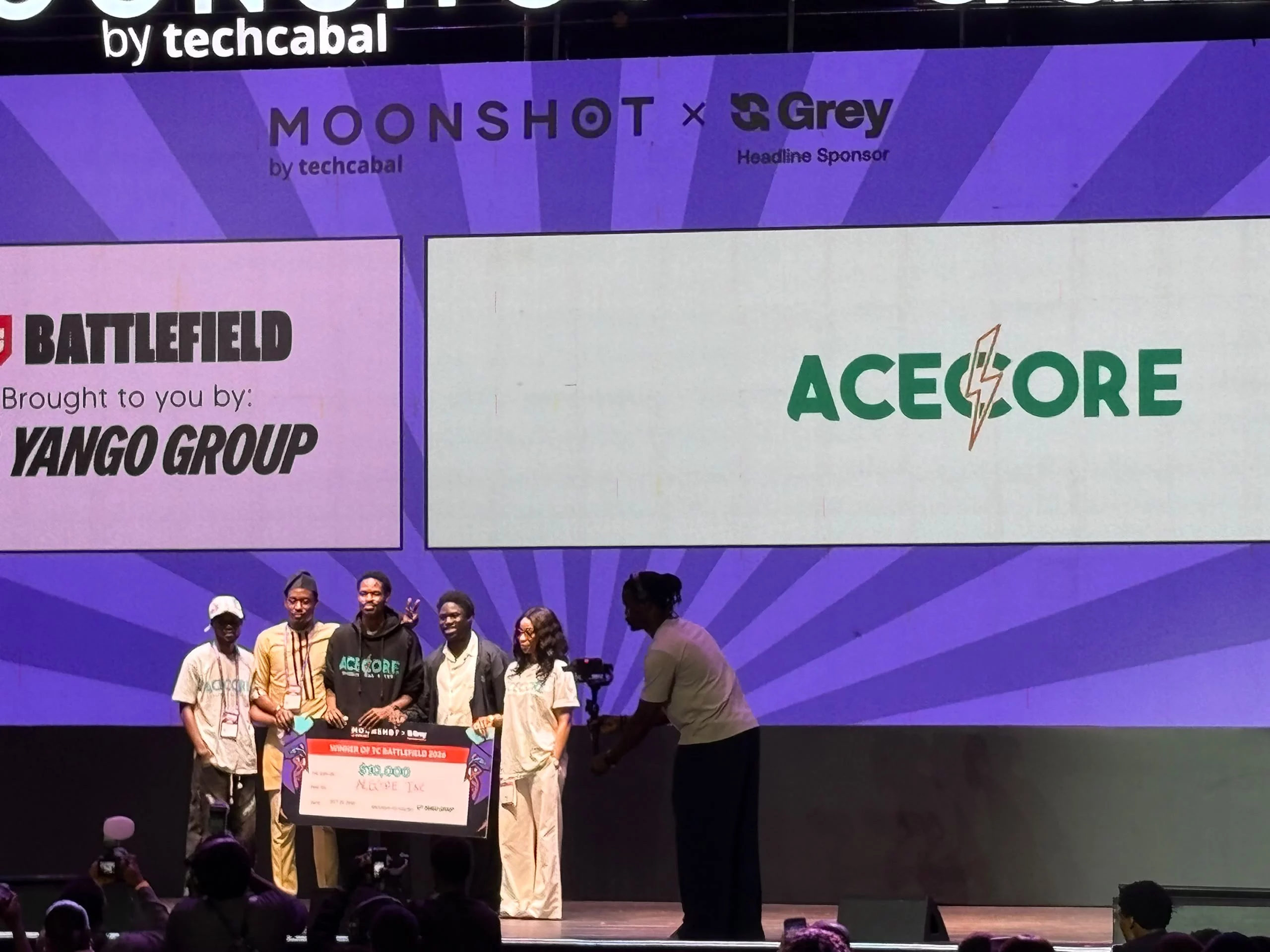 Nigerian solar-tech company, Acecore, won the TC Battlefield at Moonshot by TechCabal 2026. Image Source: TechCabal
If you thought African startups were running out of problems to solve, you only needed to spend some time at Moonshot 2026’s Startup stage in Lagos to reconsider.
Fertitude, a healthtech startup, pitched its digital platform that combines reproductive health tracking, AI-powered guidance, and access to healthcare specialists. Lena, an edtech startup, showed how it uses AI-powered games to help children learn subjects such as mathematics and science. Qiqi Farms pitched its technology-driven food distribution business, which connects farmers to markets and uses cold-chain infrastructure to deliver fresh produce.
These startups, alongside seven others, made the final ten of TC Battlefield 2026, TechCabal’s annual startup pitching competition, sponsored this year by Yango Group, the Russian-founded mobility company operating in Africa. The competition allowed founders to pitch their businesses to investors and compete for $17,500 in equity-free funding.
After the pitches, Acecore won, taking home the $10,000 grand prize. The Nigerian climate-tech startup is building locally manufactured, AI-powered solar battery systems through its Powercell product. Paired with its Powercore app, the system allows users to monitor energy performance and manage their power supply, offering an alternative to unreliable electricity.
Supplya, a Nigerian startup that helps small retailers source inventory from manufacturers and access interest-free buy-now-pay-later (BNPL) financing, was first runner-up, winning $5,000. Navidyn Limited finished third, taking home $2,500.
TC Battlefield is an annual startup pitching competition, held as part of the Moonshot conference. It gives early-stage African startups a platform to showcase their products and compete for equity-free funding and other growth opportunities. The competition has become a recurring feature of Moonshot, with Ulé Homes, a Nigerian proptech startup that helps people finance rent payments, winning last year’s edition.
Founders who missed out this year have an opportunity for redemption. TC Battlefield will return at next year’s Moonshot.


Upgrade your business today
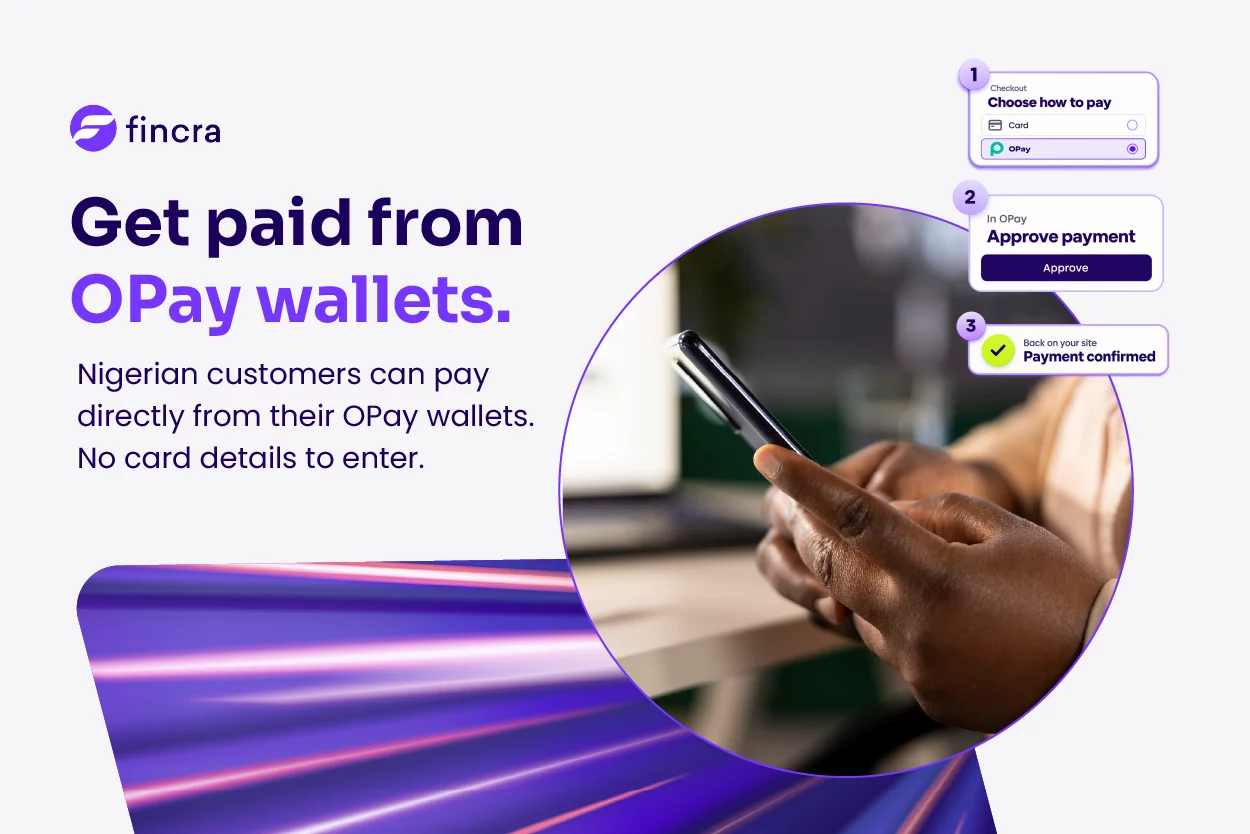
Pay with OPay is live on Fincra. Customers approve payments straight from their OPay wallet, and you get confirmation back on your site. Available now for NGN collections! Upgrade your business today with Fincra pay with OPay.
Moonshot
Moonshot Day 2 recap from Muktar’s POV
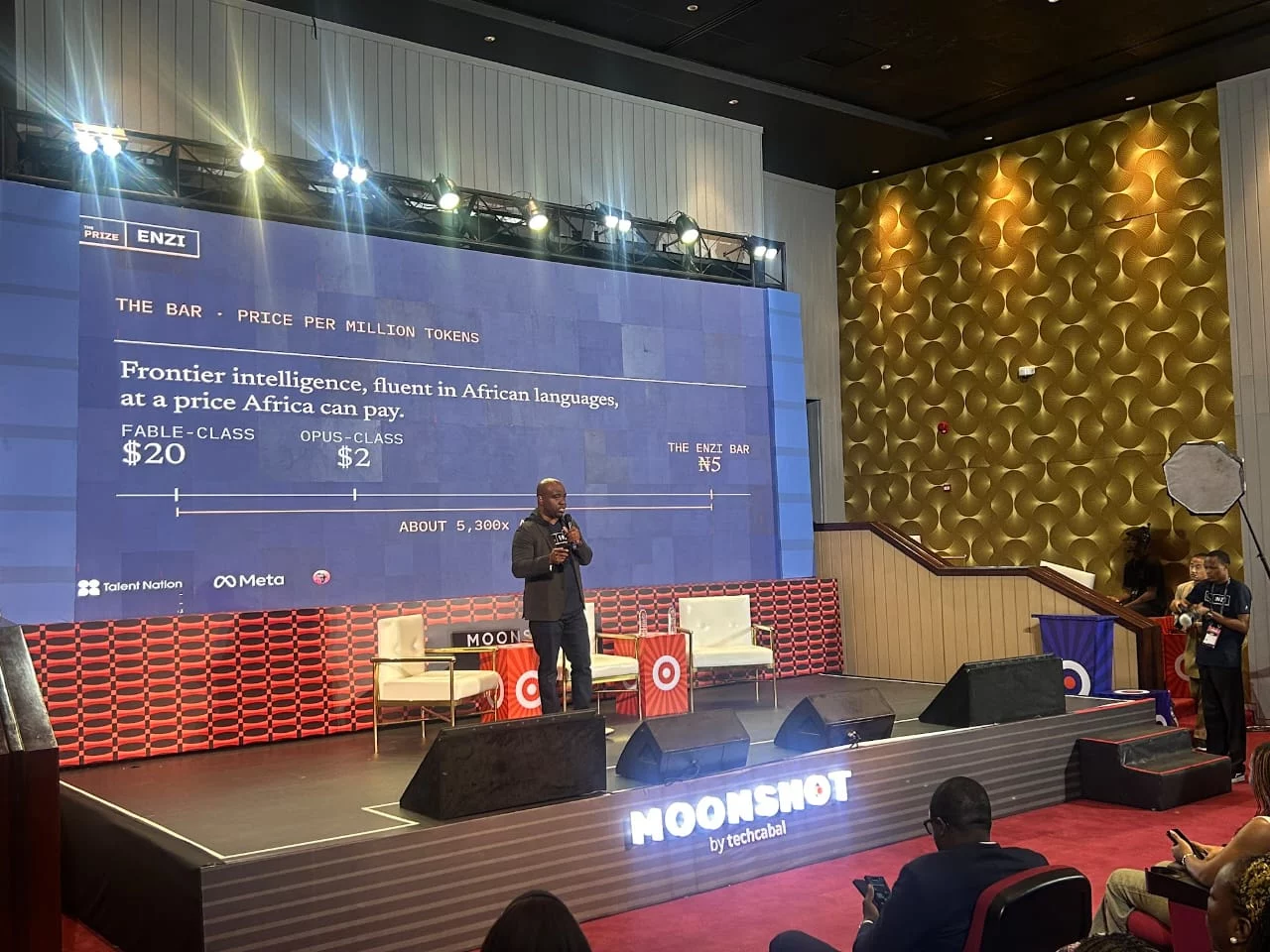 Image Source: TechCabal
It’s a wrap. Moonshot 2026, the biggest gathering in African tech, ended after two packed days at the National Theatre. You got it all. Uber drivers asked passengers if they were heading to “that event.” People were getting confused about the venue on Day 1. Over 7,500 people came through the doors, two large exhibition halls ran out of space, and the tweets did not stop coming.
If you weren’t there, you probably felt like you were missing out. I was there, and I can confirm you were.
This was our fourth Moonshot, and each one has been bigger and louder than the last—and this year raised the bar again.
I ran into my friend Kwadwo, who flew in from Ghana, only twice all day. Both times, he told me he had never expected anything like this from us. That means something coming from him: Kwadwo works at the Bank of Ghana, which runs its own big tech event next door.
Some of the biggest crowds came for Fu’ad Lawal and Sir Demola Aladekomo; Salem King and Chude Jideonwo; and Jessica Hope, Nana Aisha and Victor Fatanmi. Their sessions filled the conference rooms, with many people standing.
Away from the stage, in the National Theatre’s corridors, Moonshot did what it does best. Old friends found each other again, founders and investors swapped numbers and closed deals, and startups walked away with $20,000 at TC Battlefield.
Next year, Moonshot returns for three days, and you can safely guess it will be bigger. If, like me, you couldn’t be in two places at once and missed a few sessions, catch up on the best of them on our website.
More value with Mycoverai
You already have a great product. With MyCover.ai, create tailored insurance for your customers across fintech, e-commerce, logistics and more, built around your product, and their needs. Get started here.
Telecoms
Herotel must open its fibre network to rivals
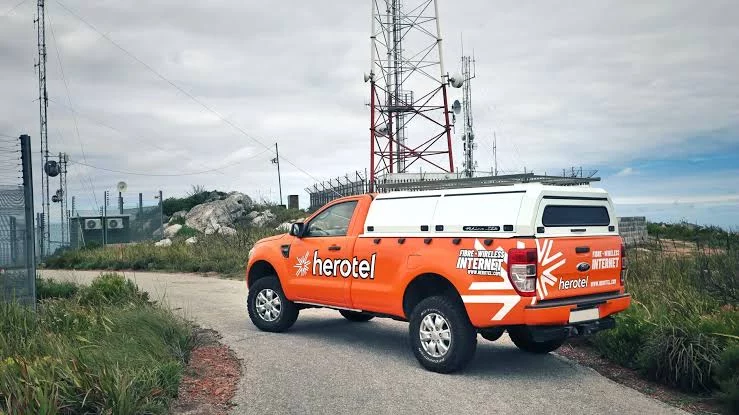 Image Source: Herotel
Herotel built its fibre business like a private road. If you wanted to use the road, you also had to buy Internet from Herotel. South Africa’s competition regulator is now making it open the gates to rivals.
What happened? Herotel, South Africa’s third-largest fibre network operator, will begin selling wholesale access to its network to other Internet service providers (ISPs). The change was imposed as a condition of Vumatel’s takeover, completed in June. Vumatel now indirectly owns 99.9% of Herotel.
Third-party ISPs must also receive the same pricing, service quality, and delivery terms offered to companies inside Vumatel’s parent group.
Explain like I’m new here: Herotel started by connecting smaller towns and underserved communities using fixed wireless Internet, before expanding aggressively into fibre in 2019. Unlike most large South African fibre operators, it kept the entire customer relationship to itself. Herotel built and owned the fibre, then sold Internet directly over it.
Vumatel works differently. It builds fibre networks and lets dozens of ISPs compete to sell internet over those lines.
Between the lines: Open access changes Herotel’s economics. It no longer gets every retail customer connected to its infrastructure, because another ISP can now win that customer. But every rival that sells a package over Herotel fibre also becomes a wholesale customer.
That trade-off becomes more important as Herotel expands. It wants to reach another 800,000 homes, taking its footprint beyond 1.4 million, largely in places bigger fibre operators have historically overlooked.
Why it matters: Fibre is expensive to build and cheap to leave idle. Opening Herotel’s network gives more ISPs an incentive to sell connections over existing infrastructure, potentially increasing how many homes actually take up fibre.
Herotel is losing exclusivity over its roads. The bet is that more traffic can make up for it.
Capital markets
Banque du Caire’s IPO is 27x oversubscribed
 Image Source: Daily News Egypt
For weeks, we’ve been talking about Banque du Caire’s imminent initial public offering (IPO), and the listing is now gaining momentum. Apparently, Egypt’s sixth-largest bank is popular with retail investors. The lender hasn’t gone public yet, but investors are asking for more shares than it has to give—a lot more.
What happened? Retail investors ordered about 9.29 billion shares in the Egyptian state-owned bank, even though only 343.1 million shares were available to them. That made the retail portion of the IPO about 27 times oversubscribed.
At the final price of EGP 5.30 ($0.10) per share, roughly EGP 49.2 billion ($921 million) was chasing just EGP 1.8 billion ($34 million) worth of stock. Investors will receive about 3.7% of the shares they requested.
Explain like I’m new here: The IPO was due to “execute” on October 29, while normal trading begins on November 2. Those are two different things.
Execution does not mean investors are already trading Banque du Caire shares with one another. It is the step where the IPO orders are finalised, shares are allocated to successful investors, and Banque Misr, Banque du Caire’s owner, completes the sale. Once those shares sit in investors’ accounts, regular trading can begin on the Egyptian Exchange (EGX).
Think of it as buying a concert ticket before the doors open. You already own your ticket, but the event has not started.
Between the lines: Retail demand looks huge, but oversubscription only tells us investors wanted the shares at EGP 5.30 ($0.095). The bigger test begins when trading opens, and buyers and sellers can set the market price.
Retail investors also have some protection. During the first 30 days of trading, they can submit shares for sale at the IPO price under a stabilisation arrangement.
If Banque du Caire trades comfortably above EGP 5.30 ($0.095), Egypt will have something more useful than a heavily oversubscribed IPO: evidence that demand survived the jump from the order book to the open market.
CRYPTO TRACKER
The World Wide Web3
Source:

 Bitcoin |
$78,533 |
– 2.15% |
– 5.83% |
| Ether |
$2,245 |
– 3.51% |
– 16.11% |
| BNB |
$717.05 |
– 5.11% |
– 6.15% |
| Solana |
$98.22 |
– 2.39% |
– 17.85% |
* Data as of 06.50 AM WAT, October 30, 2026.
Job Openings
- Sparkle Nigeria — Business Growth Manager — Lagos, Nigeria
- Tech Safari — Content Lead — Nairobi, Kenya, and Abuja, Nigeria (remote, anywhere in Africa)
- CredPal — Credit Underwriter — Lagos, Nigeria
- Pesa — Social & Influencer Marketing Manager — Remote (Nigeria)
- Bamboo — Product Manager (Misan) — Hybrid (Lagos, Nigeria)
- Àngeles Sostenibles — Operations Associate — Abuja, Nigeria
- Coinomad — Sales Manager, Business Development Manager — Nigeria
- Sumsub — Senior Anti-Fraud Analyst — Remote (anywhere)
- AfriChange — Compliance Specialist — Remote (Nigeria)
- Scouthappy — Growth Lead for Fintech (Stocks) — Remote (Nigeria)
- Daya — Growth Product Manager (Daya Coins) — Remote (Nigeria)
- Qore — Site Reliability Engineering (SRE) Manager — Lagos, Nigeria
- Afreximbank — Student and Postgraduate Internship — Cairo, Egypt
Looking for more opportunities? There are additional openings on TechCabal’s job board. We’ve also cleared out outdated listings to keep opportunities fresh for job seekers. If you’re hiring and would like to feature an open role, please submit it via this form.

Written by: Yemi Kareem, Muktar Oladunmade, and Emmanuel Nwosu
Edited by: Emmanuel Nwosu & Ganiu Oloruntade
Want more of TechCabal?
Sign up for our insightful newsletters on the business and economy of tech in Africa.
- The Next Wave: futuristic analysis of the business of tech in Africa.
- Francophone Weekly by TechCabal: insider insights and analysis of Francophone’s tech ecosystem
P:S If you’re often missing TC Daily in your inbox, check your Promotions folder and move any edition of TC Daily from “Promotions” to your “Main” or “Primary” folder and TC Daily will always come to you.










 English (US) ·