
 4 hours ago
1
This is Follow the Money, our weekly series that unpacks the earnings, business, and scaling strategies of African fintechs, financial institutions, companies, and governments. A new edition drops every Monday.
South African banks earn money from fintechs that compete with them. A payment company or fintech can build its own app, find customers, and help businesses accept payments, but still needs to pay a bank to move that money through the country’s financial system.
The South African Reserve Bank (SARB), the country’s central bank, wants to let regulated non-banks do more of that work themselves.
On October 20, SARB governor Lesetja Kganyago said the central bank plans to publish a new authorisation framework by the end of November 2026.
The reforms would allow approved non-banks to issue electronic money, process merchant payments, and access clearing and settlement systems directly, without a sponsor bank.
It puts banks’ income from fintechs up for grabs. South African payment companies could keep money they now pay their bank partners or use the savings to cut fees and win customers. The choice will determine whether opening the system makes payments cheaper or simply changes who earns from them.
Lesaka Technologies, a South African fintech group serving consumers and merchants, offers a clear example of what that dependence costs.
In its September 2025 earnings call, Ali Mazanderani, Lesaka’s executive chairman, said the company paid banks for access to the payment system and lost out on interest it could have earned on money (deposits) held through those partnerships.
Under a sponsorship arrangement, the fintech brings in customers while a bank provides access to the payment system and earns a fee for doing so.
 In September 2025, Ali Mazanderani, Lesaka’s executive chairman, says bank sponsorship costs the fintech fees and forgone interest income. Image Source: MyBroadband
Lesaka wants to bring more of that work in-house by acquiring Bank Zero, a South African digital bank. First announced in June 2025, the deal was still awaiting regulatory approvals in September 2026, with completion expected in December.
“The addition of Bank Zero will improve our existing value proposition, especially in our Consumer business,” Mazanderani said.
“In terms of product, it should reduce dependencies on third parties, improve our responsiveness to clients, increase availability, reduce friction, and expand the range of customers we can address.
“In terms of cost, we currently have expenses we incur associated with bank sponsorship both in terms of direct fees and indirectly in foregone interest or float revenue, which have a negative drag on our P&L.”
SARB’s reforms would give approved payment companies direct access without having to buy a bank. They could then choose whether to keep paying for sponsorship or take on the cost of connecting and operating independently.
Merchants would benefit if that change lowers providers’ costs and competition pushes them to pass the savings on through lower fees.
Who earns from the customer’s payment?
In the year ended June 2026, Shoprite, South Africa’s largest supermarket chain by annual revenue and store count, earned R334 million ($20.2 million) in money transfer commissions, up from R290 million ($17.5 million) the previous year. The retailer operates 2,839 outlets.
It earned another R214 million ($13 million) from handling payments to third-party accounts and insurers, bringing those two income streams to R548 million ($33 million), about 0.2% of the group’s total revenue that year.
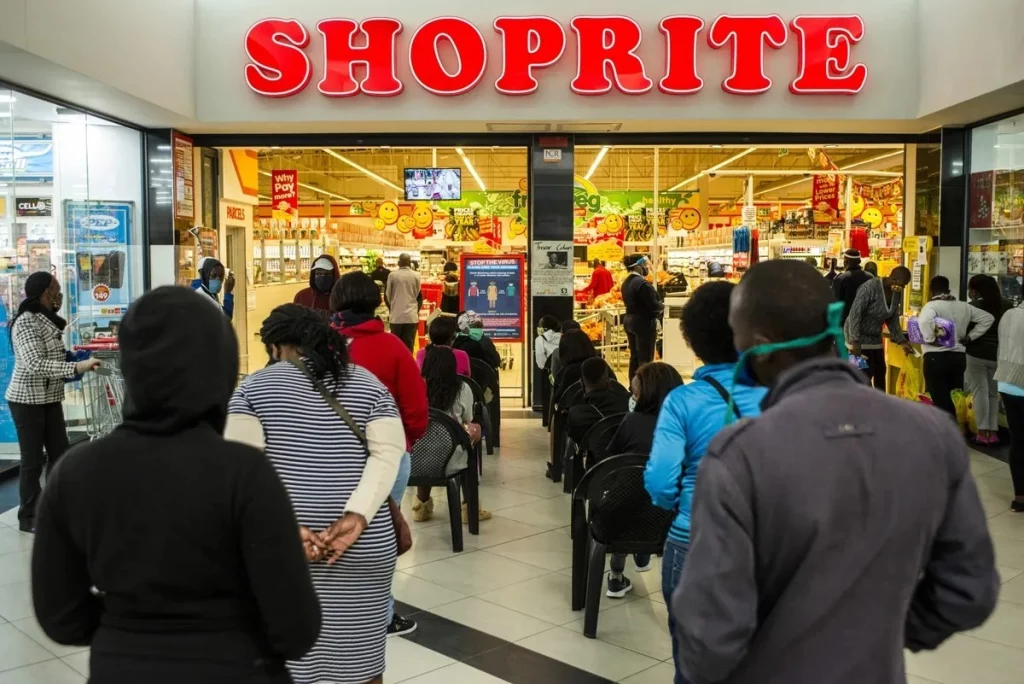 Shoprite’s store network brings in customers who transfer money and pay bills, generating R548 million ($33 million) in commissions in its 2026 financial year. Image Source: Waldo Swiegers/Bloomberg
It is a small but meaningful revenue for the country’s largest retailer. But for a much smaller fintech without the same reach, that could be a substantial source of revenue, underscoring why companies outside banking want a bigger role in payments.
Shoprite’s earnings show that companies outside banking already make money by helping customers move money and pay bills.
However, its customer accounts still depend on a bank: Shoprite brings its brand, customers, and store network (reach) to the partnership. African Bank, a South African lender, provides the banking services behind Shoprite’s Money Market Account, which had 4.3 million users as of June 2026.
African Bank also earns from these relationships. In its 2025 results, the lender said fees and commissions from strategic partnerships helped grow its non-interest income, alongside increased use of its transactional accounts and credit cards.
The lender’s non-interest income grew by 39% to R2.1 billion ($126.7 million) in the year ended September 2025.
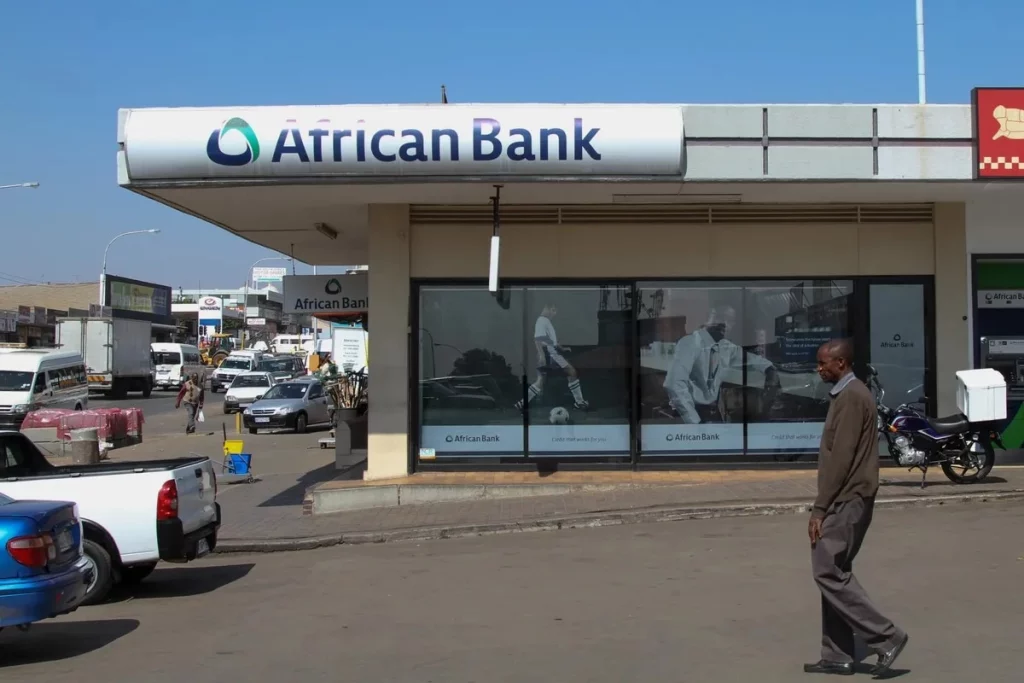 African Bank provides the banking services behind Shoprite’s Money Market Account, earning fees through its partnerships with non-banks. Image Source: Dean Hutton/Bloomberg
SARB’s reforms would give qualifying non-banks the option to handle more of the payment process themselves.
Approved companies could connect directly to clearing and settlement systems, which exchange payment instructions and settle money between institutions, without a bank sponsor.
The financial opportunity is to retain more of the income from customers they already serve. Lesaka has identified fees and forgone interest as costs of its bank partnerships.
Direct access would allow qualifying payment companies to replace some services they buy from banks, while taking on the expense of providing those services themselves.
That gives them two ways to compete: keep more money from existing transactions or lower their charges to attract more business.
Merchants and consumers benefit from the savings when providers choose the second option.
Opening access gives these companies more room to compete with banks and negotiate with them.
The financial incentive would allow non-banks to retain more of the income from customers they already serve.
Who pays for a cheaper payment?
Customers can pay for free while merchants cover the cost. Ozow, a South African digital payments company, said it charges merchants 1.5% for its Pay by Bank and PayShap Request services, with a R1 ($0.06) minimum per transaction. It also charges R3 ($0.18) per payout or refund.
Ozow does not charge the customer making the payment, but their bank may charge them, according to the company.
Cutting Ozow’s merchant fee would leave the business with more money from each sale. Cutting the customer’s bank fee would make the payment cheaper for the customer.
Some banks already offer free transfers. GoTyme Bank, a South African digital bank, said it charges nothing for PayShap transfers of up to R5,000 ($302), according to its website.
Transfers above R5,000 ($302) and up to R50,000 ($3,016) cost R7 ($0.42), while receiving money is free.
Who gets paid when you make a payment?
The person sending money is not always the one paying the fee. Explore two South African payment services to see who gets charged — and why cheaper infrastructure does not automatically mean cheaper payments.
The customer pays. The merchant gets the bill.
In this example, a business uses Ozow to collect a payment. Tap each participant to see its role and what the published pricing tells us.
Ozow
Merchant fee: 1.5%, minimum R1Ozow charges the business for collecting payments through its Pay by Bank and PayShap Request services. Its published standard rate is 1.5% of the transaction, with a minimum charge of R1.
What does Ozow charge on a sale?
Published standard tariffThis calculates Ozow’s published standard merchant fee only. It does not estimate any customer bank charge, bank sponsorship cost or other contractual arrangement.
The bank decides what the sender pays.
PayShap is a shared instant-payment service. Participating institutions set their own customer prices. Explore GoTyme Bank’s published consumer tariff below.
GoTyme charges nothing to send R5,000 using PayShap.
These are GoTyme Bank’s consumer PayShap tariffs, not fees charged by every participating bank. The maximum GoTyme PayShap instant payment shown here is R50,000.
A payment company saving money does not automatically mean its customers save money. Lower operating costs benefit merchants or consumers only when providers pass those savings on through lower charges.
Approved payment companies could connect to clearing and settlement systems without a bank sponsor. That could reduce what they pay their bank partners. Customer prices would still be set by the provider.
Qualifying non-banks could connect directly instead of buying certain services from a sponsoring bank.
Sponsorship costs could fall, but direct participants would take on their own operating and compliance expenses.
They could retain savings or reduce the fees paid by merchants and customers.
What is not yet known: How much any particular provider would save from direct access, or whether those savings would be passed on.
Sources: Ozow published pricing; GoTyme Bank PayShap tariffs.
Tariffs checked: October 26, 2026.
Note: Payment flow is a simplified explanation of participants and charges, not a technical settlement diagram. The two tabs cover different services.
PayShap is the shared instant-payment service behind those transfers, but participating institutions set their own customer prices. The infrastructure allows money to move; the provider decides what to charge for moving it.
Direct access would give qualifying non-banks more control over the cost of providing these services.
Competition would determine whether they use that control to lower merchant charges, offer customers more free transactions, or retain more income.
Price also affects how often people use digital payments. On October 20, Kganyago said PayShap processed only about 6% as many transactions as cards last year.
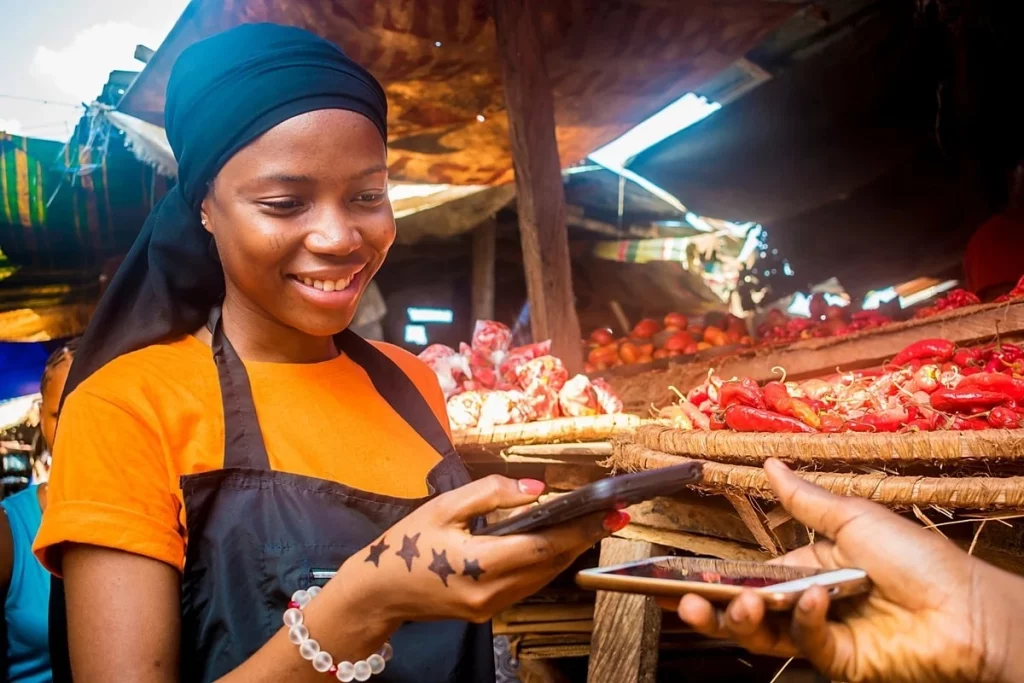 PayShap launched in 2023 to make instant payments more accessible, but pricing and limited merchant acceptance still constrain its use. Image Source: ITU
He identified pricing, low awareness, inconsistent services across banks, and limited merchant acceptance as obstacles to wider use.
Payment companies have a reason to cut fees if doing so attracts enough additional business. The opportunity is to earn less from each payment while handling more of them. Competition could turn greater access into cheaper payments for merchants and consumers.
Replacing the bank has a price
Direct access also brings expenses for fintechs and qualifying non-banks. They could take on expenses their bank partners currently handle.
SARB’s May draft framework proposes R3 million ($181,000) in initial capital for companies accepting payment instructions for merchants, and R5 million ($301,692) or R8 million ($483,000) for electronic money issuers (EMIs), depending on their tier.
They would also need systems and staff to protect customer funds, keep services running, and meet reporting requirements.
These commitments would determine whether direct access costs less than bank sponsorship. Larger providers could spread the expense across more transactions; smaller payment companies and non-banks might still find a bank partnership cheaper.
The reform gives payment companies a choice over how they operate. Savings begin only when doing the work themselves costs less than paying a bank.
True scale demands moving beyond surface-level integrations to robust execution. We’ve filtered the noise out of Moonshot 2026, optimising the conference strictly for high-calibre connections between startup founders, global financial operators, enterprise leaders and individuals rewiring Africa’s technical frameworks. Get 20% off Early Bird tickets for a limited time.













 English (US) ·