.jpeg)
 1 day ago
2
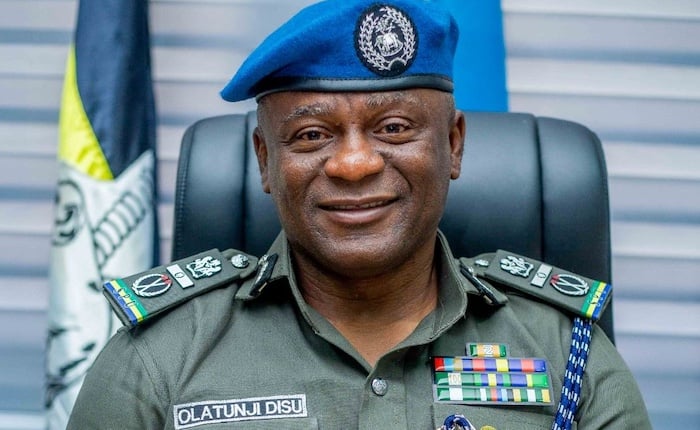
Inspector-General of Police Olatunji Disu has assured Nigerians that the Nigeria Police Force will not become a political tool ahead of the 2027 general elections, warning that officers who support candidates or parties will face disciplinary action.
Disu spoke on Tuesday, November 24, during the second day of the Media Development Conference organised by the Centre for Journalism Innovation and Development at the Abuja Continental Hotel.
He said policing must be built on public trust and accountability, with the force guided by professionalism, neutrality and its responsibilities under the law. “Any police officer found to be partisan, to have taken sides, or to have aided any candidate or the party will face disciplinary action under the force’s code of conduct,” he said.
Addressing concerns about the alleged use of cybercrime legislation against journalists, Disu pledged that the police under his leadership would not assist politically motivated efforts to suppress or intimidate people.
He also warned that threats to elections increasingly extend beyond physical attacks to the information environment. Fabricated videos, manipulated audio, coordinated falsehoods on social media and misleading reports could disrupt elections and provoke violence, he said.
During a panel discussion on people-centred public safety and state policing, Disu sought to reassure Nigerians concerned that governors could misuse state police structures. He said safeguards were being developed to prevent such institutions from being captured for personal or political purposes, including provisions for federal intervention where necessary.
According to him, the National Assembly and other stakeholders were working on a framework suited to Nigeria’s circumstances rather than simply adopting foreign models. He added that training standards would remain uniform nationwide, ensuring that officers in states such as Lagos and Kano received consistent professional preparation despite differences in local responsibilities.
On enforcement of the Cybercrime Act, Disu said the force had held two symposiums since he assumed office to examine the legislation and digital offences. He encouraged journalists and other Nigerians to familiarise themselves with the law, noting that some online activities regarded as minor could constitute offences.
Personnel assigned to the police cyber section were also receiving training and equipment to respond to emerging digital threats, he added. Disu affirmed that journalism was not a crime and described media practitioners as important partners in development and government accountability.
He said Nigeria’s press freedom environment compared relatively favourably with those of some neighbouring Sahel countries, while acknowledging that relations between journalists and the police still needed improvement.
Recalling a paper he wrote during a management course at the Staff College in Jos, Disu said he had advocated allowing journalists to accompany officers during serious crime investigations. He argued that such cooperation could improve understanding of police work and the challenges investigators encounter before making arrests.
However, he stressed that sensitive operations required discretion. Disu cited an incident during his tenure as Commander of the Rapid Response Squad in Lagos involving efforts to rescue a kidnapped state Accountant-General.
He said premature reporting that a suspect had been arrested alerted associates of the kidnappers who were demanding ransom, complicating the operation. The experience, he said, demonstrated the importance of professional relationships, careful handling of information and consideration of the wider public interest.
He also recalled officers reacting aggressively when someone began filming them as they assisted a stranded motorist. He linked their response to anxiety about previous cases in which viral footage had contributed to officers losing their jobs.
Nevertheless, Disu said police personnel were being sensitised to respect and protect journalists covering events and to avoid unnecessarily obstructing their work. He announced that Commissioners of Police had been directed to hold regular meetings with journalists in their areas.
Plans were also underway for joint lectures and pre-election training in Abuja and other states to improve election reporting and introduce journalists to relevant police commanders and unit officers before the polls.
Disu expressed hope that discussions at the conference would generate practical ideas to strengthen Nigeria’s media environment.
The post Police will not be used as political tool in 2027 election – IGP appeared first on Linda Ikeji Blog.

















 English (US) ·