.jpeg)
 4 hours ago
2
Rise of Fearless, the African-owned battle royale mobile game, has raised $1 million from Epic Edges Capital, a Dubai-based investment firm, through a Simple Agreement for Future Equity (SAFE), to expand its audience and build a commercially sustainable gaming franchise.
The fresh capital will fund game development, infrastructure, marketing, and community-building, while bringing experienced international gaming executives and developers into the project.
The investment comes amid growing investor interest in Africa’s gaming industry, fuelled by an expanding player base and demand for locally developed games. Africa’s gaming market is projected to generate $1.98 billion in revenue in 2026, according to a report by gaming tech startup Carry1st and research firm Newzoo. Mobile gaming is expected to account for nearly 82% of that revenue.
Launched in 2025, Rise of Fearless is a free-to-play battle royale game based on Ethiopia’s 1896 Battle of Adwa, where players can choose avatars and weapons and compete in a peer-to-peer survival match. The game, available on Google Play Store and the App Store, has recorded over 15,000 total downloads, according to its founder, Kanessa Muluneh.
She said the investment marks a shift from experimenting with a gaming product to building a business capable of competing internationally.
“Launching a game is really not the hardest part,” she told TechCabal in an October 27 interview. “But scaling it and competing with whatever is out there is definitely something I underestimated.”
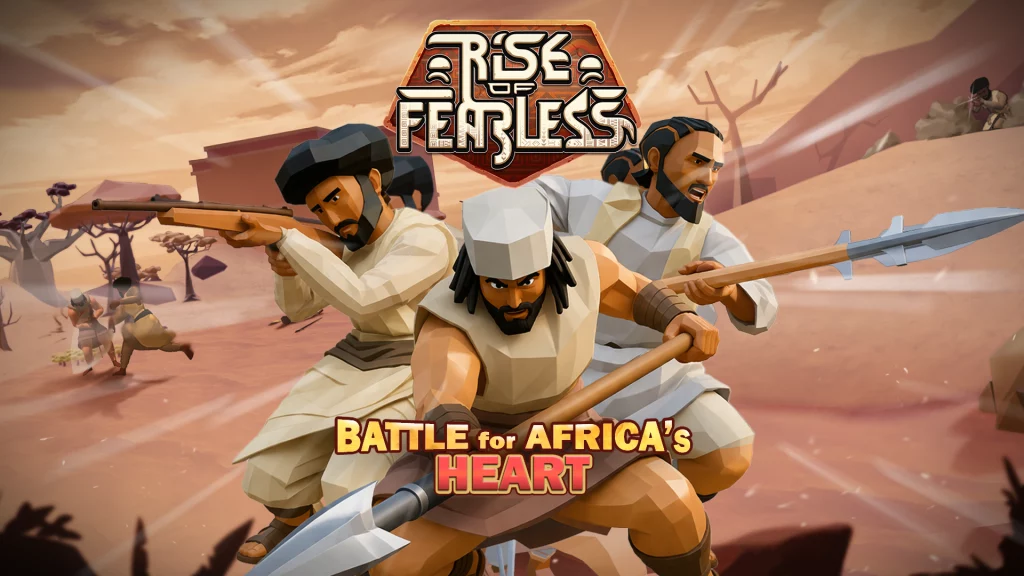
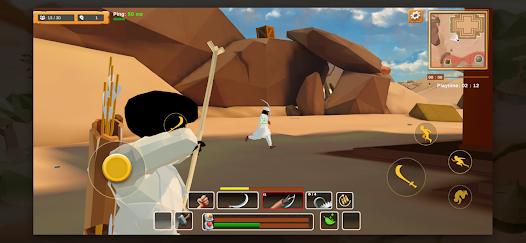
Under the financing arrangement, Muluneh said Rise of Fearless has one year to meet agreed performance milestones, including reaching 100,000 active players and completing significant technical improvements to the game. The company did not disclose its valuation and the precise terms under which Epic Edges would receive equity.
The milestone tied to the financing underscores a considerable leap from the game’s current traction. Rise of Fearless has surpassed 15,000 total downloads, with its largest player communities in Nigeria, Ethiopia, and South Africa, according to Muluneh. Meeting the target would require not only attracting substantially more users but also retaining them as active players.
Muluneh is betting that international expertise and stronger marketing will drive growth as investor interest in Africa’s gaming industry increases.
“I did 15,000 [game downloads] by myself,” she said. “If I can do that by myself, then no doubt that with a strong team and strong marketing plan we can easily get 100,000 in Africa.”
The Rise of Fearless deal also highlights growing investor appetite for African-based gaming ventures and storytelling, even as developers grapple with converting player engagement into sustainable revenue.
In October, Vatar, the startup behind the viral Nigerian browser game Lagos Life, raised $500,000 in an angel round at a $10 million valuation, barely a week after its launch. The company is now reportedly seeking an additional $2.5 million in pre-seed funding at a $15 million valuation, according to local publication Condia.
Funding a gaming ambition
Muluneh said she has financed most of Rise of Fearless’s development herself. In the interview with TechCabal, she estimated spending nearly $2.8 million developing and promoting the game, which currently generates revenue only through advertising.
“Because I had to get it audited for the investment, I had to count how much money I basically spent on a monthly, yearly basis on this game, and we came close to $2.8 million,” she said. “And that’s not just money for the development; there’s also money for the marketing that I spent, for all the travelling to attend events, management team, social media, [and] community management. In hindsight, it wasn’t necessary. I didn’t have to spend that much. But this is the price you pay if you go in without a plan, I guess.”
Some of those costs accrued from mistakes during the game’s early development, including changing development teams and failing to secure ownership of certain game assets, Muluneh said.
The investment also follows an earlier financing arrangement that never materialised into usable capital. In September 2025, Muluneh told the magazine Entrepreneur MENA that Rise of Fearless had secured $700,000 from an undisclosed private investor.
“What’s strategic about our approach is that we haven’t deployed these funds yet – we’re being intentional about timing. When we do, 25% will go toward game development and the remaining 75% toward marketing,” she said at the time.
However, she told TechCabal that the funds were never deployed and the arrangement was ultimately abandoned after disagreements over its terms.
Muluneh said she chose to continue financing the project independently rather than accept investor pressure before she had settled on a viable strategy.
One of the biggest unresolved questions is how Rise of Fearless will make money. While advertising has generated some revenue, Muluneh has deliberately delayed a broader monetisation push to prioritise gameplay and audience growth. She did not disclose the game’s advertising revenue or monthly operating costs.
Building an African-owned gaming franchise
Muluneh’s monetisation strategy has expanded beyond gameplay and advertising revenue to building a broader gaming franchise. After visiting San Francisco, United States, and meeting gaming industry executives, she began exploring additional revenue streams, including merchandise, events, sponsorships, and licencing the game’s intellectual property (IP).
The company is bringing four international gaming firms into its development and publishing team as partners to improve gameplay, strengthen its commercial strategy, and expand the Rise of Fearless franchise, according to the founder.
Miniboss Solutions, a gaming consultancy specialising in publishing and marketing and led by Adam Krause, who previously worked at Ubisoft, 2K/Take-Two and Capcom, and TJ Consunji, who previously worked at PlayStation and Krafton.
Trick Question Studios, an entertainment IP development firm led by TQ Jefferson, a former executive at Marvel and Disney, and senior manager at Pixar, will oversee franchise strategy and creative direction.
IDG Intelligence, a gaming industry research and advisory firm led by president and chief executive officer Yoshio Osaki, will provide market research, data analytics, and investment strategy expertise.
Spectra Entertainment, a game development company specialising in art, technical art, and AAA-quality production, will contribute technical expertise to improve the game’s development and visual experience.
Muluneh said these partnerships are intended to do more than improve the game. She wants international specialists to transfer technical knowledge to African developers, allowing the project to retain more of its competitive edge.
“Knowledge is the biggest asset right now. Knowledge and access,” she said. “You know, the African market always deals with the brain drain, where knowledgeable people leave the continent to build somewhere else. This time, we’ll do it the other way around, where we bring knowledge into the continent to build here.”
Rise of Fearless draws inspiration from Ethiopia’s victory over Italian forces at the Battle of Adwa. Its characters, environments, and visual identities reflect African cultures, an approach Muluneh believes can help establish an internationally recognisable entertainment franchise with African ownership.
“We [Africa] don’t lack talent; we lack knowledge and opportunities and people believing in us. I think that’s the biggest difference,” Muluneh said. “The whole goal is for them to transfer the knowledge onto the African developers, people, team, and communities.”
The company is now reviewing its technology and rewriting parts of the game’s storyline as it develops a gaming IP portfolio. Muluneh said a comprehensive technical audit is underway, after which the team hopes to relaunch an improved version of the game. She did not disclose an expected release date.
The expansion also comes as Africa’s gaming market continues to grow. According to Carry1st and Newzoo, Africa is expected to reach about 406 million gamers by 2026, as mobile phone usage expands.
But the growing market has not eliminated the difficulties African game developers face. Limited access to financing, uneven infrastructure, fragmented payment systems, and a shortage of reliable market data continue to constrain studios seeking to reach paying audiences across multiple countries.
Muluneh acknowledged that monetising games across Africa remains particularly difficult because payment infrastructure and consumer behaviour vary considerably between markets. Those challenges will become more pressing as Rise of Fearless seeks to convert downloads into recurring engagement and revenue to break even.
“Maybe 80% of our work will be figuring out if we can get [the game] monetised throughout the whole continent, and not just the big markets,” she said. “Some countries are adaptive to it. Some are not. So it will remain a challenge.”








 English (US) ·